How Much Does HR Software Really Cost in 2026? A Guide
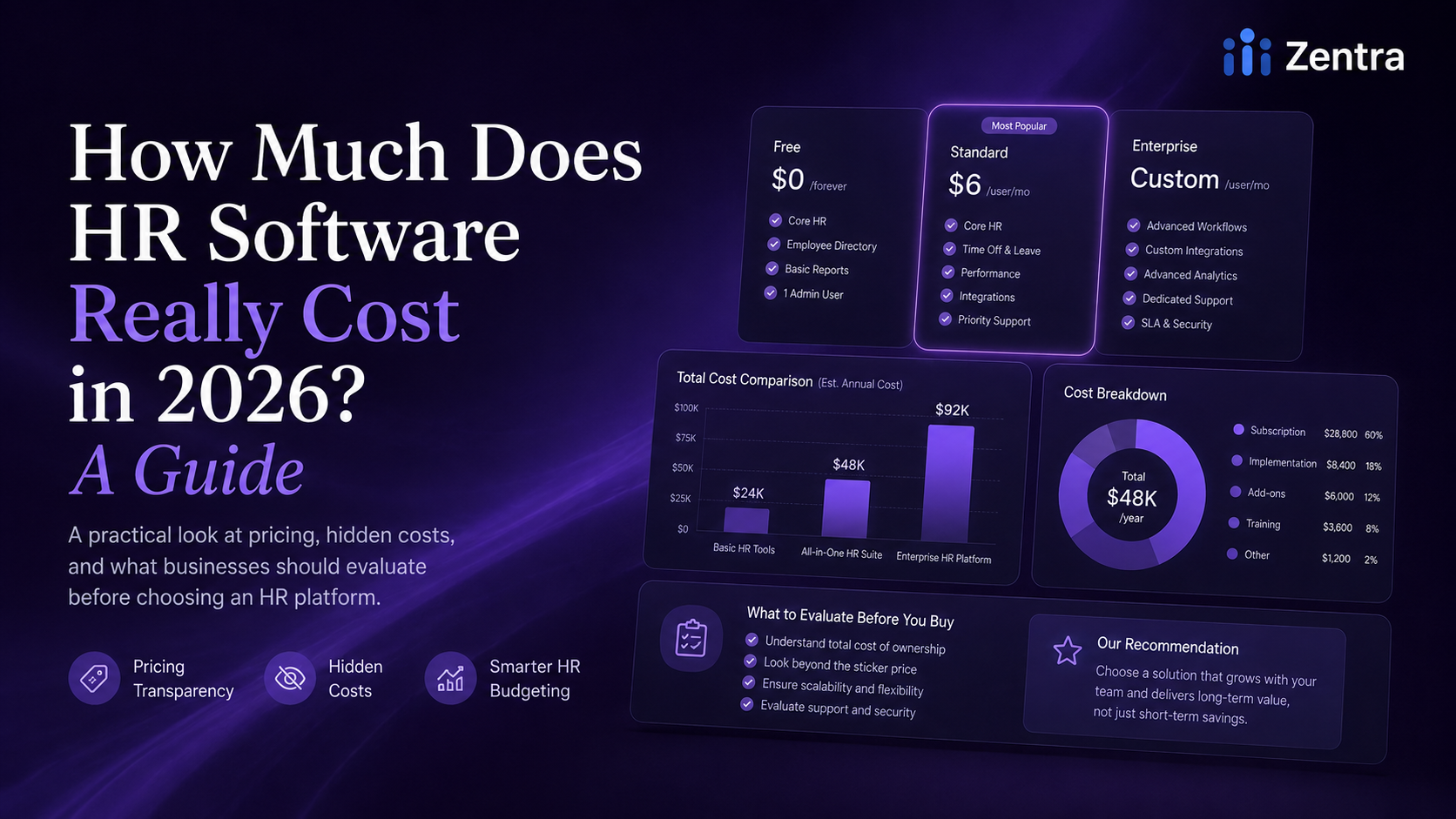
The number on a pricing page is rarely the number you end up actually paying once a contract's been running a year. Here's what typically adds up in the background, why "starting at $X per employee per month" is usually the opening line of a longer conversation rather than the whole answer, and where free options genuinely fit into that picture rather than getting dismissed as too good to be real.
Three common pricing models, and why each exists
Per-employee, per-month is the most common structure across HR software generally, because it scales revenue directly with a customer's growth: the vendor earns more as headcount rises, which from their side funds ongoing support and infrastructure. The listed rate is often the cheapest available tier, with features like advanced payroll, reporting, or integrations frequently gated behind a pricier plan you don't discover until you're comparing tiers seriously.
Flat monthly fees with employee caps are simpler to budget around short-term, since the number doesn't move month to month, but growing past the cap usually triggers an unplanned jump to the next bracket, sometimes a substantial one, right around the time you're already stretched from onboarding new hires.
Free with paid add-ons is the rarest model in this category, and it's the one Zentra uses: the full core platform free regardless of headcount, with AI Copilot usage credits as the only thing that costs anything past an included monthly allowance. It's rare because it requires a different underlying business model, one not dependent on per-seat revenue to stay viable.
Costs that rarely show up on the pricing page itself
Implementation and setup fees, especially common on anything positioned toward "enterprise," sometimes run into real money before a single employee record exists in the new system. Per-module pricing splits payroll, benefits administration, and applicant tracking into separate add-ons rather than a base plan, meaning the advertised starting price only covers a fraction of what most teams actually need. Support tier gating puts faster response times or a dedicated account manager behind a higher-priced plan, discovered only once something's gone wrong and the response takes longer than expected. Renewal price increases mean a locked-in signup rate quietly isn't the renewal rate, sometimes disclosed in a contract clause rather than communicated proactively before the increase hits. And data migration and training time is a real cost even though no invoice ever itemizes it - hours spent exporting from the old system, cleaning up data, and getting a team comfortable with a new interface, routinely underestimated by whoever's budgeting the switch.
No specific vendor dollar figures cited anywhere in this piece, deliberately. Software pricing changes often enough that a number accurate today reads stale within months - exactly the kind of claim that needs a current, sourced check before publishing rather than a figure written from memory.
A rough way to calculate what something will actually cost you
Rather than comparing sticker prices directly, estimate total cost across a full year at your actual headcount, including whichever add-ons your team would realistically need on day one, not just the modules bundled into the cheapest tier. Multiply that by expected headcount twelve months out, not today's number, since that's usually where budgets quietly go over plan. Add a rough estimate for migration and training time if switching from an existing system, valued at whatever an HR team's time is actually worth per hour. That total, not the number on the pricing page, is the real comparison point between platforms.
What "free" usually means elsewhere, versus what it means with Zentra
Most tools marketed as free are free only up to a small employee count, then convert to per-seat pricing the moment you grow past it, quietly turning "free" into a different pricing model with a delay built in. Zentra's free tier carries no seat cap: the same platform, the same features, whether current headcount is five people or five hundred. The only cost path runs through Copilot usage past its included allowance, not through a headcount threshold that eventually forces an upgrade.
The real question worth asking any HR software vendor
Not "what does it cost to start," but "what does this cost in year two, at roughly double today's headcount, including whatever add-ons we'd actually need by then." That's where HR software budgets tend to go over plan in practice - and it's worth getting a straight, specific answer before signing anything, rather than discovering it on next year's renewal invoice.