How AI Can Spot Employee Burnout Before It's Too Late
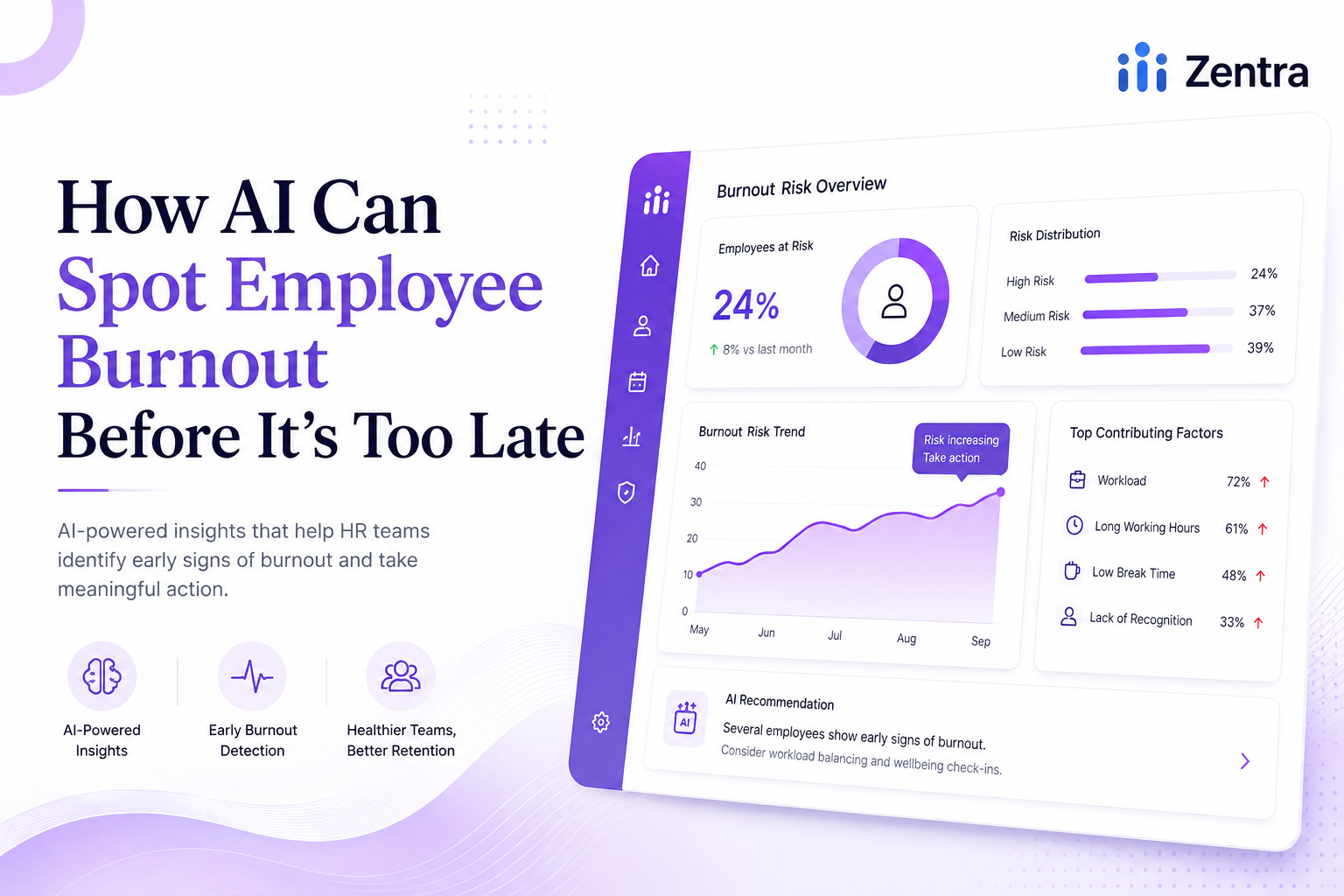
Burnout doesn't announce itself. By the time an employee says they need a break, or more often, quietly starts job hunting instead, the warning signs have usually been visible in the data for weeks, sometimes months. The problem isn't that HR teams don't care. It's that nobody is watching overtime hours and leaving patterns closely enough to catch the trend before it turns into a resignation letter.
The data already exists. It just wasn't being used this way.
Most HR systems already track exactly what predicts burnout: overtime hours creeping upward, leave requests drying up (people burning out often stop taking time off rather than start), and attendance regularity breaking down. None of this requires new surveillance. It's the same data every HR platform already collects for payroll and compliance. The shift is using it to flag a pattern, instead of letting it sit in a report nobody opens.
Team-level signal, not individual surveillance
There's an important line between "HR sees a rising risk trend across a team" and "a manager gets a dossier on one employee." The first is genuinely useful and, done properly, privacy-respecting. The second is the kind of monitoring that makes burnout worse, because employees stop trusting the systems meant to help them. Any AI approach here needs to sit clearly on the right side of that line: aggregate patterns for HR, a plain-language wellness nudge for employees, nothing clinical or invasive.
What this looks like in practice
Zentra's Burnout Prediction Radar works from exactly this angle. It tracks overtime, leave usage, and attendance regularity already sitting in the system, surfaces team-level risk for HR, and shows employees a friendly wellness tip rather than a flagged status. No new monitoring tools. No individual surveillance. Just data Zentra already has, used before a resignation instead of after one.
Why this beats another annual engagement survey
An engagement survey tells you what already happened, usually months after it mattered. A pattern-based approach tells you what's happening right now, while there's still time to adjust a workload, check in, or redistribute a project, instead of finding out during an exit interview.
Burnout prevention isn't a perk bolted onto HR software. For a team that's already stretched thin, it might be the highest-leverage thing an HR platform can do quietly in the background.